View/Export Results
Manage Existing Surveys
Create/Copy Multiple Surveys
Collaborate with Team Members
Sign inSign in with Facebook
Sign inSign in with Google

Agile Retrospective Survey Questions (Free Template)

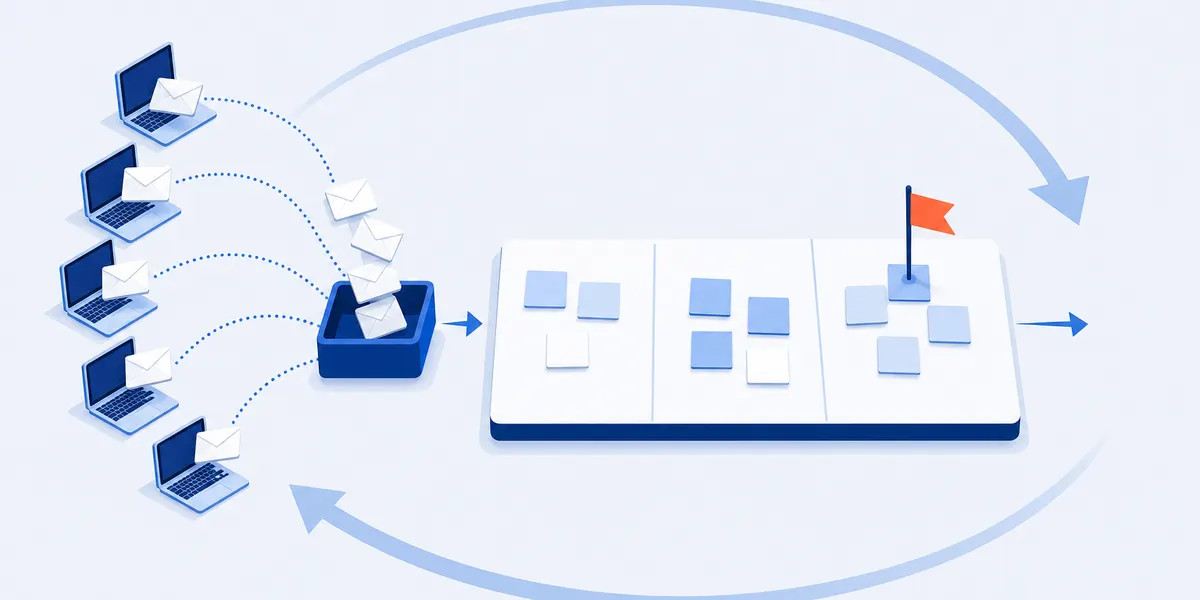
Run this agile retrospective survey at the end of a sprint to capture honest feedback while details are fresh. You will get trendable ratings plus a few high-signal comments you can bring into the retro, then convert into 1-3 tracked commitments (owner + due date).

9
Questions
6 min
Completion Time
4.3
☆☆☆☆☆
6.2k+
Uses
Use This Template Copy & Edit
The retrospective session was a productive use of time.
1
2
3
4
5
Strongly disagree Strongly agree
Team collaboration during the sprint was effective.
1
2
3
4
5
Strongly disagree Strongly agree
Sprint goals were clear and achievable.
1
2
3
4
5
Strongly disagree Strongly agree
What went well during this sprint?
What challenges or obstacles did the team encounter?
What should we start doing, stop doing, or continue doing in the next sprint?
What was the primary blocker for this sprint?
Communication issues
Unclear requirements
Technical debt
Resource availability
Dependencies on others
Other
Do you have any suggestions for improving our retrospective process?
Your role in the team (e.g., Developer, Scrum Master)?

Trusted by 5000+ Brands

Trusted by Red Bull, Yale, Apple, Harvard, Shopify and more

When to Run an Agile Retrospective Survey (3 Best Moments)

End-of-sprint pre-retro pulse (24-48 hours before the meeting)

Goal: surface themes before you walk into the retro. Default: send the survey 24-48 hours before the retro so people can answer asynchronously and you can inspect and adapt in the Sprint Retrospective cadence (The Scrum Guide). Do this now: schedule the invite for tomorrow and keep it to the core questions only.

Post-release or milestone retro (same week as the release)

Goal: validate what to repeat next cycle (process, coordination, quality). Default: send within 1-3 days of the release while context is still clear. Do this now: add one optional module for release readiness (handoffs, testing, comms) and tag the results to the release name.

Post-incident process review (focus on handoffs and fixes, not blame)

Goal: capture improvements you can make to reduce repeat incidents. Default: run the survey within 24-72 hours after stabilization. Do this now: enable the on-call/support questions only for people who participated, and keep prompts system-focused (alerts, runbooks, escalation paths) to support a blameless learning culture (Google SRE: Postmortem Culture).

Aim for a completion time under 7 minutes. Default to every sprint for new teams; switch to alternating sprints once you have stable trends and strong retro habits (use the other sprint for a lighter retro format).

Core + Optional Agile Retro Survey Questions (by Theme and Team Type)

Goal: collect trendable sprint feedback and a short list of root causes you can act on. Default: keep a stable core of rating questions every sprint, then rotate 1 optional module when you need deeper signal. Do this now: copy the core questions into your survey and use a consistent scale (see Likert scale best practices).

  • Core setup: 8-12 rating items you never change + 3-5 comment prompts.
  • Comments setup: ask for specifics and examples using open-ended questions, then cluster themes in the retro.
  • Branching logic: only show the on-call/support block to people who took call; only show platform/infra to teams doing reliability work that sprint.

"Overall, this sprint was successful."

Why it matters: This is your north-star outcome rating. Trend it sprint over sprint and use dips as a trigger to look for patterns.

When to use: Include in every run. Use as the first chart in your retro prep.

Likert Segment by: squad, role (eng/PM/design/QA), location

"The sprint goal was clear and stable."

Why it matters: Unclear goals drive churn and half-finished work. This question flags when scope and priorities were moving under the team.

When to use: Every sprint. Review low scores alongside sprint scope changes and mid-sprint priority shifts.

Likert Segment by: role, tenure on team

"Sprint planning produced a realistic plan for the time available."

Why it matters: When the plan is consistently unrealistic, people normalize overtime and carryover. This is a fast check on planning quality.

When to use: Every sprint. Pair with a comment prompt on what made the plan unrealistic.

Likert Segment by: role level, new vs established squads

"We were able to complete work without frequent blocking dependencies."

Why it matters: Blockers (approvals, upstream changes, cross-team waits) are a common reason retros repeat the same complaints. This item helps you quantify the drag.

When to use: Every sprint. Segment by squad to spot systemic dependency hotspots.

Likert Segment by: dependency type, squad

"Work moved through review, testing, and release smoothly."

Why it matters: Flow breaks often live in the last mile (reviews, CI, QA queues, release windows). This keeps the discussion on the bottleneck, not the symptom.

When to use: Every sprint. Ask a follow-up comment for the single biggest slowdown.

Likert Segment by: repo/service, role

"Collaboration between engineering, product, design, and QA worked well this sprint."

Why it matters: Delivery issues are often coordination issues. This item catches misalignment early so you can fix handoffs and decision-making.

When to use: Every sprint. Segment by role to spot perception gaps.

Likert Segment by: role, squad, time zone

"Our quality practices (tests, reviews, definition of done) helped us ship confidently."

Why it matters: When confidence drops, teams either slow down or ship risky changes. This item points to where you need to tighten or simplify quality checks.

When to use: Every sprint. Use the optional modules below to drill into CI/CD or incident spillover.

Likert Segment by: service maturity, on-call participation

"The pace this sprint was sustainable."

Why it matters: Unsustainable pace predicts burnout and quality issues. This is the quickest way to catch silent overtime and context switching.

When to use: Every sprint. If scores drop, ask one comment: "What made the pace feel unsustainable?"

Likert Segment by: role, seniority, on-call load

"Our tools and processes helped more than they slowed us down."

Why it matters: Tooling friction is easy to ignore because it is gradual. This item helps you justify small fixes that compound over time.

When to use: Every sprint. Track it alongside the top friction comment prompt below.

Likert Segment by: platform vs product squads, location

"I felt comfortable raising concerns or asking for help during the sprint."

Why it matters: Low scores often show up as late surprises, hidden blockers, and quiet disagreement. Psychological safety is strongly tied to team learning and speaking up.

When to use: Every sprint, especially for newer teams or after conflict. Keep it anonymous and discuss patterns, not people.

Likert Segment by: role, tenure on team (avoid small cuts)

"What should we START doing next sprint?"

Why it matters: This turns feedback into experiments. It also reduces vague advice by forcing a concrete behavior or process change.

When to use: Every sprint. Ask for one suggestion per person and require an example ("What would it look like?").

Open text Segment by: squad only (avoid deanonymizing)

"What should we STOP doing next sprint?"

Why it matters: Stopping low-value work creates capacity faster than adding new meetings or tools. This is where you find waste, rework loops, and unnecessary approvals.

When to use: Every sprint. In the retro, vote on the top 1-2 "stops" you can actually control.

Open text Segment by: squad only

"What is the single biggest opportunity to improve next sprint?"

Why it matters: This forces prioritization. When you ask for one thing, you get clearer, more comparable answers.

When to use: Every sprint. Use responses as the input list for retro dot-voting.

Open text Segment by: squad only

Optional modules (rotate 1 per sprint)

  • Product engineering: Add "Requirements were ready before work started" and "We got timely feedback from PM/design" when discovery-to-delivery handoffs are the pain point.
  • Platform/infra: Add "Interruptions and escalations were manageable" and "We had the access/permissions we needed" when reliability work and internal customers dominate.
  • Data: Add "Data definitions were clear" and "Upstream data changes were communicated in time" when metric disputes or pipeline breaks slow delivery.
  • Design: Add "Design reviews happened early enough" and "We had clear acceptance criteria" when late changes cause churn.
  • On-call/support (branch to participants only): Add "Alerts were actionable" and "Runbooks helped resolve issues" to drive system fixes instead of blame.

Keep your core stable so you can trend results and avoid endless rehashing. Research on retrospectives shows teams can get stuck repeating the same topics without turning them into improvements; use the survey to spot repeats and force action selection in the meeting (Recurring opinions or productive improvements: what agile teams actually discuss in retrospectives).

Who Should Take the Retro Survey (and How to Protect Psychological Safety)

Goal: hear from the people doing the work without making anyone feel exposed. Default: send to the full agile delivery team (engineering, PM, design, QA, data, ops) and keep it anonymous. Do this now: list the roles on the squad, then send one link to everyone who attended standups or contributed work this sprint.

Default respondent group (keep it simple)

  • Include: engineers, PM, designer(s), QA, data partners, on-call/support participants, and delivery/ops partners who joined the sprint work.
  • Exclude by default: skip-level leaders and performance reviewers (keep the line between improvement feedback and evaluation).

When to include PMs, dependent teams, or external partners

Default to the team only. Use a small add-on survey for PMs, designers, QA, or dependent teams when coordination is the bottleneck and you need their side of the story.

  • Limit their question set to 5-7 items on clarity, handoffs, response time, and planning alignment.
  • Keep results separate so the core retro stays team-owned.
Psychological safety setup you can copy/paste

Invite script: "This is for process improvement, not performance evaluation. Answer honestly; we will pick 1-3 actions and track them next sprint." Psychological safety is tied to team learning and speaking up, so make the purpose explicit and repeat it every time (Psychological Safety and Learning Behavior in Work Teams).

Identity rule: Do not collect names, exact job titles, or other unnecessary identifiers. If you need segmentation, use broad buckets (e.g., role family) and avoid any cut that creates a group of 1.

Minimum-N rule for comments: Share verbatim comments only when N is large enough to reduce re-identification risk (set a team norm like N>=5). When N is smaller, share themes and redact identifying details.

Comment hygiene: Ask people to describe behaviors and system conditions ("handoff took 3 days") and avoid naming individuals. Pair this with steps to reduce response bias by making the survey feel safe and non-punitive.

Keep the survey short and predictable so people trust it. Standards bodies emphasize clear purpose, minimal burden, and protecting respondents; treat those as non-negotiables in your retro pulse (AAPOR best practices for survey research).

Design Choices: Pre vs Post, Anonymous vs Named, 5-Point vs 7-Point

Goal: lock a simple design that gets high response and honest answers. Default: pre-retro (24-48 hours), anonymous, 5-point scale, stable core + rotating module. Do this now: pick one option in each row and keep it fixed for at least 4-6 sprints so trends mean something.

Choice Option A Option B Default pick
Timing Pre-retro survey
Best for: surfacing themes early; shorter meetings.
Watch out for: the retro discussion can change perceptions.
Choose if: you want better prep and higher response.
Post-retro survey
Best for: confirming alignment on actions; rating the retro itself.
Watch out for: lower completion after the meeting.
Choose if: you are measuring retro usefulness/safety.
Pre-retro for the core sprint feedback; add 1-2 post-retro items only when you are improving the meeting.
Identity Anonymous
Best for: candor; sensitive topics; newer teams.
Watch out for: limited follow-up on specific stories.
Choose if: psychological safety is fragile.
Identifiable (or confidential)
Best for: targeted follow-up; coaching support.
Watch out for: lower honesty, especially on conflict.
Choose if: trust is high and you will explain why names are needed.
Anonymous for sprint feedback. Use identifiable only when you have a clear follow-up plan and explicit consent.
Scale 5-point
Best for: speed; fewer confusing distinctions.
Watch out for: less sensitivity in small changes.
Choose if: you run it every sprint and want high completion.
7-point
Best for: more sensitivity when people use extremes.
Watch out for: slower answers; more "it depends" ratings.
Choose if: you need finer trend movement and your team is comfortable with surveys.
5-point for sprint pulses. Go 7-point only if you will actually use the extra granularity in reporting.
Question set Stable core
Best for: clean trends and faster analysis.
Watch out for: blind spots if you never rotate topics.
Choose if: you want sprint-over-sprint comparability.
Rotating modules
Best for: deep dives (on-call, infra friction, discovery).
Watch out for: losing trend continuity if everything changes.
Choose if: you need to investigate a specific problem.
Stable core + 1 rotating module so you keep trends and still adapt to context.

Keep survey burden low to protect completion rates; questionnaire length is a common driver of drop-off in many contexts (Effect of questionnaire length, personalisation and reminder type on response rate).

Results Guide: Turn Retro Survey Feedback into 1-3 Commitments

Goal: turn survey ratings and comments into 1-3 concrete improvements your team will actually finish. Default: run a 5-step pass the day before the retro, then finalize actions in the meeting. Do this now: block 30 minutes on your calendar to prep the summary and draft an action log entry template.

  1. Sanity-check responses and scan for urgent items
    Count responses, then skim comments for anything that needs immediate escalation (harassment, safety issues, major production risk). If you see an urgent issue, route it to the right owner outside the retro and keep the retro focused on improvement.
  2. Summarize ratings and compare to the last sprint
    Create a one-page view: each core rating, current sprint average, last sprint average, and the biggest up/down moves. Bring two callouts into the retro: the lowest-rated area and the largest drop, and treat them as inputs to Sprint Retrospective inspection and adaptation (The Scrum Guide).
  3. Cluster comments into themes you can work on
    Tag each comment into 5-10 themes (e.g., "dependencies," "CI instability," "unclear scope," "on-call load"). Agile retro guidance emphasizes moving from raw observations to shared insight; use a quick clustering pass so the retro starts with patterns, not a comment reading marathon (Agile Retrospectives: Making Good Teams Great).
  4. Vote and pick the top 1-3 improvements
    Present the theme list and the trend chart, then run dot-voting (or a simple ranked vote) to select 1-3 items. Keep the bar high: if an item cannot be changed next sprint, park it and pick something you can control.
  5. Write action items with an owner, due date, and definition of done

    Turn each selected improvement into a one-line commitment your team can track:

    • Owner: one person accountable (not "the team").
    • Due date: inside the next sprint.
    • Definition of done: observable and binary ("merged," "enabled," "documented and reviewed").
    • Expected impact: which rating/theme it should improve.
    • Confidence: high/medium/low so you can adjust scope.

    Publish the commitments in a visible place (ticket, wiki, retro doc), then start the next retro by reviewing last sprint's actions and marking them done/not done. Survey quality guidance also emphasizes planned use of results and follow-through; make the action log part of your sprint rhythm, not an optional step (AAPOR best practices for survey research).

If the same themes keep repeating across multiple sprints, go one level deeper with a broader team effectiveness survey template and run a quarterly improvement plan instead of trying to fix everything inside sprint retros.

Frequently Asked Questions

Should I send the retrospective survey before or after the retro meeting?

Default to sending it 24-48 hours before the retro so you surface themes early and reduce meeting time spent brainstorming. Use a short post-retro check only when you want to confirm alignment on actions or measure whether the meeting felt safe and useful. Pick one timing and keep it consistent for at least a few sprints so your trends are comparable.

Should the retro survey be anonymous?

Default to anonymous responses for sprint feedback so people speak up about blockers, quality issues, and team friction. Use identifiable (or confidential) responses only when you truly need targeted follow-up and trust is already high, and explain exactly how names will be used. On small teams, protect anonymity by sharing themes instead of verbatim quotes when comments could be traced to a person.

How long should an agile retrospective survey be?

Aim for under 7 minutes: a stable core of rating questions plus a few high-signal comment prompts. Rotate optional modules (on-call, infra friction, release readiness) instead of adding more questions every sprint. If response rate slips, shorten first and then add a single reminder before the deadline.

What is the minimum team size or response count to share written comments?

Default to sharing verbatim comments only when the group is large enough to reduce re-identification risk (many teams use a minimum like N>=5). If the team is smaller or a role is unique, share themes and examples after redacting names, projects, or other identifying details. Set the rule upfront so nobody is surprised by how comments are handled.

How do we run this retro survey across multiple squads without creating unhealthy score comparisons?

Standardize the core questions, scale, tags (squad, sprint name), and reporting periods so each squad can trend its own results. Avoid public leaderboard-style comparisons; review results inside each squad first, then roll up cross-squad themes and systemic blockers. If you must compare, compare changes over time within a squad, not absolute scores across squads.

How do we make sure feedback turns into real change sprint over sprint?

Enforce a 1-3 commitments rule and write each action with an owner, due date, and definition of done. Publish the actions right after the retro, then start the next retro by checking last sprint's actions and marking them done/not done. Track action completion alongside your overall sprint health rating so follow-through is visible.

FREE TO START -- NO CREDIT CARD REQUIRED

Create Your Agile Retrospective Survey Questions (Free Template) Now.

Start Building ➔