View/Export Results
Manage Existing Surveys
Create/Copy Multiple Surveys
Collaborate with Team Members
Sign inSign in with Facebook
Sign inSign in with Google

Patient Satisfaction Survey Template

A patient satisfaction survey for one outpatient visit: eleven questions ask what happened, two ask for the patient's own words, two are the numbers you report. Answer it the way a patient will, or copy the block you need.

  • 15questions
  • About 3 minfor the patient
  • One visitclinic, dental or telehealth
  • No identifiersno name, no record number
Patient Satisfaction Survey · answer to move through it
Use this template
Question 1 of 15 Getting seen
Did you get an appointment as soon as you needed one?
1
2
3
4
5
No, not at allYes, definitely
Question 2 of 15 Getting seen
Did the visit start close to the time you were given?
1
2
3
4
5
No, not at allYes, definitely
Question 3 of 15 Your clinician
Did the clinician seem to know your history before the visit started?
1
2
3
4
5
No, not at allYes, definitely
Question 4 of 15 Your clinician
Did the clinician listen to what you came in to say?
1
2
3
4
5
No, not at allYes, definitely
Question 5 of 15 Your clinician
Were you given enough time to ask what you wanted to ask?
1
2
3
4
5
No, not at allYes, definitely
Question 6 of 15 Your clinician
Were you part of the decision about your treatment?
1
2
3
4
5
No, not at allYes, definitely
Question 7 of 15 Staff and the practice
Was the person on the front desk helpful when you arrived?
1
2
3
4
5
No, not at allYes, definitely
Question 8 of 15 Staff and the practice
Was the waiting area clean when you arrived?
1
2
3
4
5
No, not at allYes, definitely
Question 9 of 15 Leaving with a plan
Did you leave knowing what to do next?
1
2
3
4
5
No, not at allYes, definitely
Question 10 of 15 Leaving with a plan
Did you know who to contact if things changed?
1
2
3
4
5
No, not at allYes, definitely
Question 11 of 15 Leaving with a plan
Were the costs you would be charged made clear to you?
1
2
3
4
5
No, not at allYes, definitely
Question 12 of 15 In your words
What was the one thing that went well at this visit?
Question 13 of 15 In your words
What one thing would have made this visit better?
Question 14 of 15 Overall
How would you rate this visit overall?
1
2
3
4
5
PoorExcellent
Question 15 of 15 Overall
Would you recommend this practice to someone who needs the same care?
1
2
3
4
5
No, not at allYes, definitely

Which patient survey to send: clinic, dental, telehealth or hospital

Four different surveys hide under one term. Find your row first.

The visitWhen it goes outLengthWhat changes
Clinic or practice visitThe morning after the visit is closed off.15 questions, about 3 minutes.Nothing. This is the template above, as written.
Dental practiceThe morning after a check-up or a treatment appointment.15 questions, three of them swapped.Comfort during the treatment, the cost quoted before it starts, and the recall booking.
Telehealth, phone or videoThe morning after the call.17 questions.Nothing is removed. Two questions are added, about hearing the clinician and joining unaided.
Hospital stay, and the follow-up after itNot this survey. The federal window opens 48 hours after discharge and closes at six weeks.[7]The federal instrument runs to 32 questions.[8]Different questions, a different owner, results by unit: the hospital quality survey covers the stay and the recovery after it.

Why the top three rows share one form. Care given and received at the same time is one visit, in a room or on video, and no published supplemental item set covers telehealth.[4][12]

Not covered here. A portal message is not a visit, and a surgery centre has its own instrument.[6] Care in the patient's own home belongs with the home care feedback survey. A commercial service call belongs with the customer service survey.

Two kinds of question, and why mixing them wastes the survey

AHRQ draws a line here that decides how every item on this form is worded.

Satisfaction and experience are different measures. Satisfaction asks whether what a patient expected was met; experience asks whether something happened.[3] Put both on one scale and a 3 is unreadable: the wait was fine, or this patient expects very little.

So the form runs two anchor sets. Eleven questions ask what happened, from "No, not at all" to "Yes, definitely", and each names one thing a practice can change on its own. The rating and the recommendation come last, and they are the only two numbers for a partners meeting.

Every question is already built in the free questionnaire maker, so reword an item or drop a block before the first send.

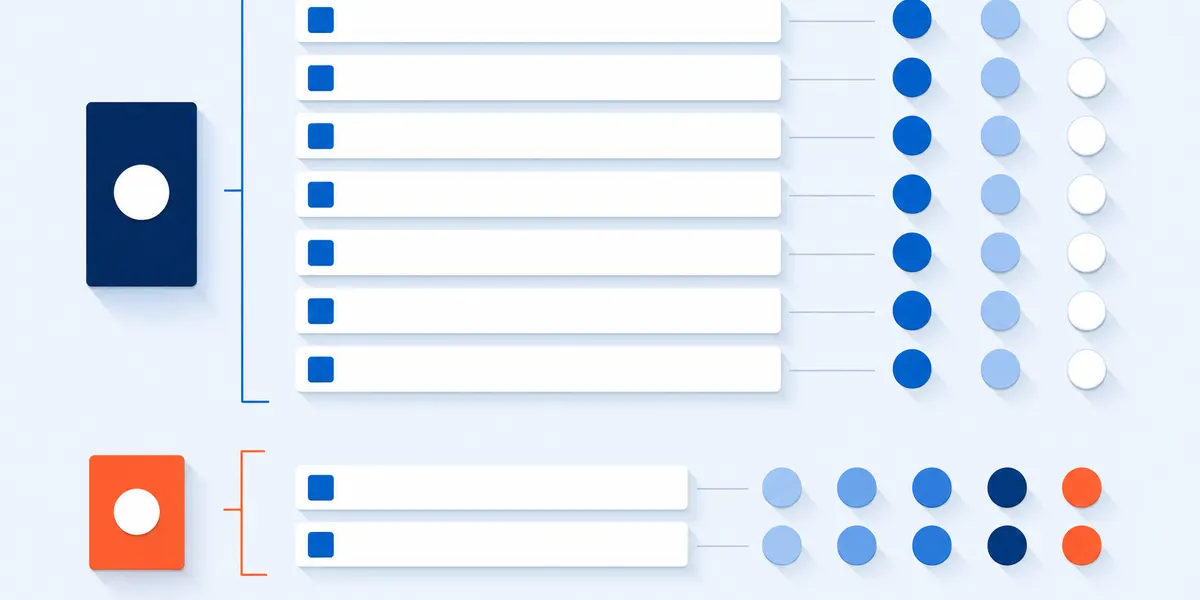
Patient satisfaction survey items split in two: a long row of things that either happened or did not, and a short row of judgement items, each row ending at its own answer scale
Ask what happened first, on its own anchors. Keep the judgements to the two at the end.

The 15 patient satisfaction survey questions, plus dental and telehealth swap-ins

Every question, its scale, and why it is on the form. Copy one block or the lot.

Plain text, one question per line, with the answer scale.

Getting seen

The half of a visit that happens before anyone is treated.

  1. Did you get an appointment as soon as you needed one?5-point, no to yesA run of 1s and 2s is capacity, not training.
  2. Did the visit start close to the time you were given?5-point, no to yesLow here with good clinician scores points at the appointment book.

Your clinician

Kept apart, so a poor overall rating traces to preparation, listening, time or the decision.

  1. Did the clinician seem to know your history before the visit started?5-point, no to yesThe form's one preparation item: a low answer reads as a record not opened.
  2. Did the clinician listen to what you came in to say?5-point, no to yesSplit from time and from the decision, so a poor rating lands on one.
  3. Were you given enough time to ask what you wanted to ask?5-point, no to yesLow with a high listening score points at appointment length, not a person.
  4. Were you part of the decision about your treatment?5-point, no to yesA flat 3 reads as a plan announced rather than agreed.

Staff and the practice

Everything that is not the consultation: cheap to fix, and judged first.

  1. Was the person on the front desk helpful when you arrived?5-point, no to yesSeparate from the clinical items, and changeable in a week.
  2. Was the waiting area clean when you arrived?5-point, no to yesOne thing, cleanliness, so the answer is actionable.

Leaving with a plan

What the patient walked out holding. Coordination fails quietly, then arrives as phone calls.

  1. Did you leave knowing what to do next?5-point, no to yesHigh clinician scores with a low answer here: said out loud, never written down.
  2. Did you know who to contact if things changed?5-point, no to yesA coordination item, not a satisfaction one. Not knowing means calling the front desk.
  3. Were the costs you would be charged made clear to you?5-point, no to yesCare and billing can be rated very differently. Drop it if patients are never billed.

In your words, and the two numbers you report

The open boxes sit before the end, so the survey still closes on a rating.

  1. What was the one thing that went well at this visit?Open text, optionalAsked before the criticism, so the box is not only for complaints.
  2. What one thing would have made this visit better?Open text, optionalPaired with the one above, so a low rating has somewhere to go.
  3. How would you rate this visit overall?5-point, poor to excellentThe number you trend. A judgement, so not comparable with the eleven items above.
  4. Would you recommend this practice to someone who needs the same care?5-point, no to yesAbout the practice, not this visit, so it sits beside the rating. Treat a 3 as a no.

Dental practice swap-ins

Replace questions 3, 6 and 11. There is no federal survey for a dental practice; the AHRQ dental survey asks enrollees about a plan.[5]

  1. Were you comfortable during the treatment itself?5-point, no to yesNothing in the medical set asks about the procedure itself.
  2. Were you told what the treatment would cost before it started?5-point, no to yesThe dental question 11: the quote given before the chair goes back.
  3. Was it easy to book the check-up the practice recommended?5-point, no to yesThe recall system, not the visit, so a low score is an admin fix.

Telehealth add-ons

Add after question 2 and change nothing else.[4]

  1. Could you hear the clinician clearly for the whole visit?5-point, no to yesHearing only, so the phone route can answer it too.
  2. Were you able to join the visit without help from someone else?5-point, no to yesAn access item: a low score sits inside a good rating.

Where these come from. They cover the same four areas as the federal ambulatory survey, and the wording is ours: this is deliberately not a CAHPS survey.[4][2] The official questions are free to use and adapt in the United States without asking anyone, so work from either set.[1]

The question we left out. Most published sets ask the patient to name the doctor or nurse they saw, which points the form at two people at once. To report by clinician, send a separate link per clinic session.

What thirty answers can tell you, and what they cannot

A practice collects answers in tens, not thousands. That changes what the numbers are for.

One number per item, never one for the survey. For each of the eleven experience items, count the share who answered 4 or 5, and do the same for the rating; never average across the two kinds. The customer satisfaction survey template works through turning ratings into a percentage. A net score is a different method, set out in the NPS survey template.

Thirty answers is a small number. One patient moving from a 3 to a 4 shifts a share by 3.3 points, so a five-point move between two months is one person changing their mind. Read three months together before you believe a direction.

Who you never hear from. A link survey reaches only the patients whose contact details you hold, and AHRQ reports web administration alone as the mode with the lowest response rates.[1] The mailed inpatient survey gets 23 percent back.[9] Read a good score as evidence about the patients you can reach.

Tag the comments, then stop. Mark each open answer with the item it belongs to and count: four mild ones about the same ten minutes of the morning are a rota problem, one furious one is one patient.

Patient satisfaction survey reach shown in three narrowing groups: all patients seen, the smaller group whose contact details the practice holds, and the smaller group again who answer
Your score describes the third group. Saying so is the difference between a number and a claim.

Sending it the morning after each day's visits

Five decisions that belong to a patient survey and to no other; the rest is in the survey research guide.

  1. Send it off yesterday's completed visit list

    One send each morning, to everyone seen the day before, in the room, the chair or on video.

  2. Give it to the practice manager, not the front desk

    Question 7 rates the front desk, and the front desk holds the contact list. The person being rated cannot send it.

  3. Invite everyone seen, not a chosen few

    A list picked by staff measures who was asked. Send the whole day list, including the patient who complained on the way out.

  4. Ask a repeat patient once a month, not once a visit

    Someone with a long-term condition can be seen four times a month. Survey them once, or your results describe your sickest patients.

  5. Report the practice until a clinician has thirty answers

    Below that the number is a handful of people. Give a clinician their own figures privately first.

Ask for nothing that identifies a patient. No name, no date of birth, no record number: if you add a question of your own, hold that line, and tell patients their answers are confidential rather than untraceable.

The note to put at the top of the survey

About this survey

This survey is about your recent visit, not your treatment.
Your answers do not go into your medical record and do not affect your care.
[PRACTICE MANAGER NAME] reads every answer, and results are reported as totals for the practice.
Please write about the visit, not about your condition.

Patient satisfaction survey FAQ

How many questions should a patient satisfaction survey have?

Keep a question only if a low answer would change something next week. That test set the length of the template above. The ceilings you read elsewhere, eight to ten items or under three minutes, are vendor convention with nothing published behind them.

When should you send a patient satisfaction survey after a visit?

The next morning, off the previous day's completed visit list, and the same after a dental appointment or a video call. A routine visit blurs quickly, and an answer that lands while the same staff are on the same rota can still be acted on.

Should the survey be anonymous, and can I still call an unhappy patient back?

Not both, with this template. If you need call-backs, add one optional contact question in the middle, never at the end, and change what the form promises: confidential rather than unnamed.

Methods and sources

What this template is based on

The four areas match the domains of the federal ambulatory instrument; the experience and satisfaction split follows AHRQ's definition.[4][3]

Question licensing

CAHPS instruments are free to use and modify in the United States without permission, and the inpatient survey is public domain.[1][7] CAHPS is a registered trademark of AHRQ and using the name for a survey needs AHRQ's permission, so this template is not a CAHPS survey, is not endorsed by AHRQ, and its results are not comparable with CAHPS results.[2] Press Ganey and NRC Health publish no item wording, so nothing derives from either.

Limits and disclosure

A link survey reaches only patients whose contact details you hold, the mode AHRQ reports as weakest for representativeness.[1] Federal response and reliability figures describe mailed hospital and health plan programmes, used here only as scale checks. On the legal question: quality assessment falls inside the definition of health care operations, and what makes an answer protected is information about a person's care that also identifies them.[10][11] Nothing here is legal advice.

SuperSurvey makes the editor this template opens in, makes no compliance claim of any kind, and the questions work without it.

References

  1. Agency for Healthcare Research and Quality. CAHPS Frequently Asked Questions. AHRQ. ahrq.gov
  2. Agency for Healthcare Research and Quality. Using the CAHPS Name. AHRQ. ahrq.gov
  3. Agency for Healthcare Research and Quality. What Is Patient Experience? AHRQ. ahrq.gov
  4. Agency for Healthcare Research and Quality. CAHPS Clinician and Group Survey. AHRQ. ahrq.gov
  5. Agency for Healthcare Research and Quality. CAHPS Dental Plan Survey. AHRQ. ahrq.gov
  6. Agency for Healthcare Research and Quality. CAHPS Outpatient and Ambulatory Surgery Survey. AHRQ. ahrq.gov
  7. Centers for Medicare and Medicaid Services. HCAHPS: Patients' Perspectives of Care Survey. CMS. cms.gov
  8. Centers for Medicare and Medicaid Services. What's New. HCAHPS Online, 2025. hcahpsonline.org
  9. Centers for Medicare and Medicaid Services. Summary of HCAHPS Survey Results, October 2024 to September 2025 Discharges. HCAHPS Online, 2026. hcahpsonline.org (PDF)
  10. Office of the Federal Register. 45 CFR 164.501, Definitions. eCFR. ecfr.gov
  11. Office of the Federal Register. 45 CFR 160.103, Definitions. eCFR. ecfr.gov
  12. Agency for Healthcare Research and Quality. CAHPS Supplemental Items. AHRQ. ahrq.gov

Send it the morning after the visit

Open it in the editor, swap in the dental or telehealth block, and send one link.

Use this template